.avif)
Why Liverpool Hut Should Be on Your Hiking Bucket List
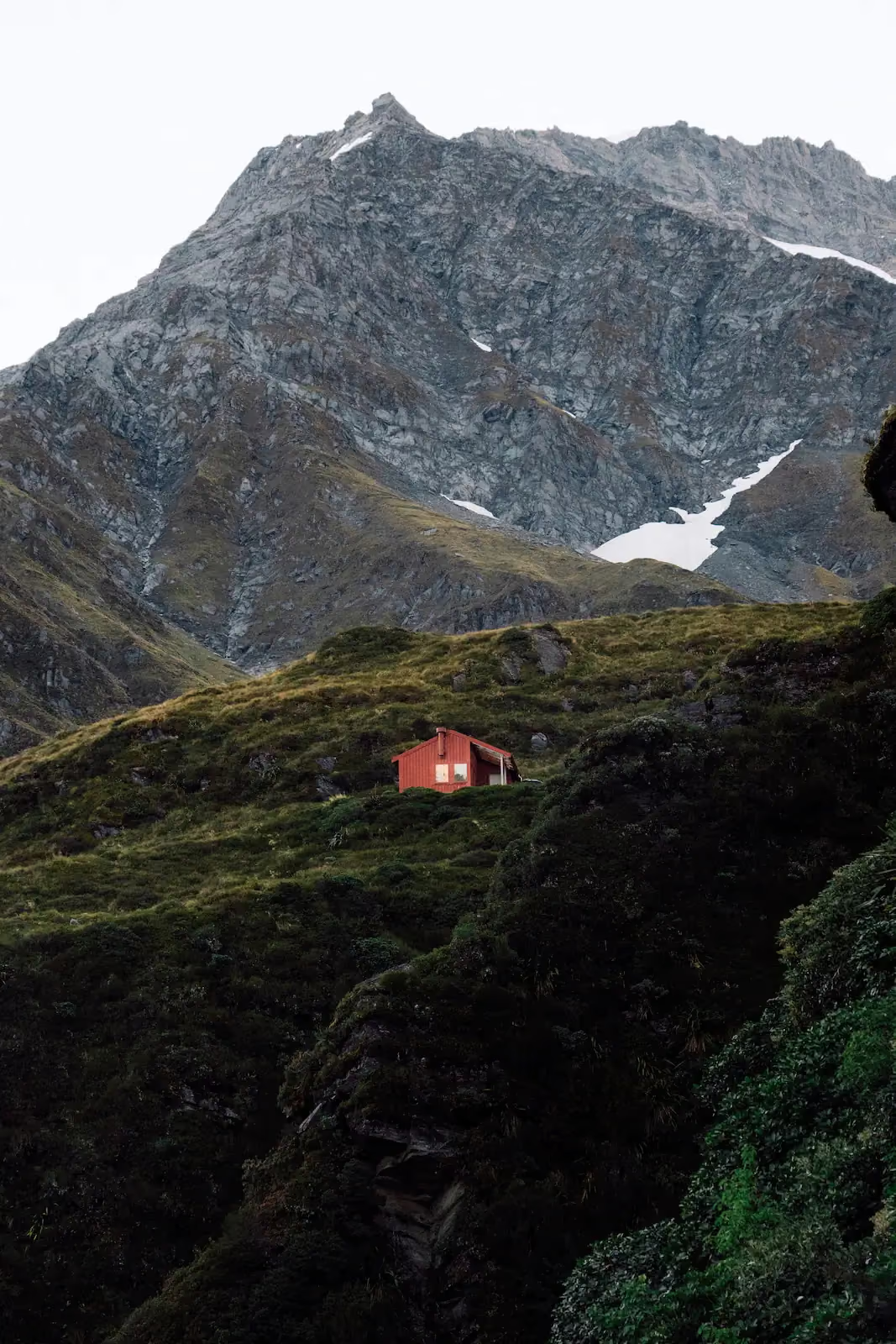
Liverpool Hut is a small ten bunk hut, with a incredible view of one of New Zealand’s most iconic mountains: Mt Aspiring. Liverpool Hut remains one of the most rewarding overnight hike trips in the Wanaka region. The combination of incredible scenery, a challenging climb, and a direct view of Mt Aspiring makes it a very memorable trip. This guide covers everything you need to know before going, along with some photos at each stage of the hike to give you an insight into the views.
Quick Facts at a Glance
- Location: Mount Aspiring National Park (near Wanaka)
- Distance: 30km return (15km each way)
- Elevation Gain: Approx. 1,100 meters
- Time: 5.5 – 7 hours one way
- Difficulty: Advanced, prior tramping experience required
- Bunks: 10 bunks · Mandatory booking Oct–Apr · Hut tickets May–Sep
- Start point: Raspberry Creek carpark, Mt Aspiring Rd (54km / 1hr from Wanaka)
- Cell service: None beyond the lower valley, carry a PLB
Getting to Liverpool Hut
Driving from Wanaka
Liverpool Hut starts at Raspberry Creek carpark, 54km from Wanaka, approximately one hour by car. The first 24km is sealed; the remaining 30km is a gravel road with a few ford crossings.
The Ford Crossings
The access road crosses up to ten shallow ford crossings on the valley floor. In typical conditions these are 20–30cm deep and pose no difficulty for most vehicles. After significant rainfall they can deepen quickly.
• Check NIWA river flow data for the Matukituki River before departing if there has been heavy rain in the preceding 48 hours
• The fourth crossing is typically the deepest. If you clear it comfortably, the rest will follow
• Do not attempt the fords after dark, or if the water is visibly brown or running fast
The Hike to Liverpool Hut
The hike to Liverpool Hut can be broken down into three distinct sections. Some hikers may only be able to complete the first two sections as the last climb is very technical terrain which can be dangerous in winter.
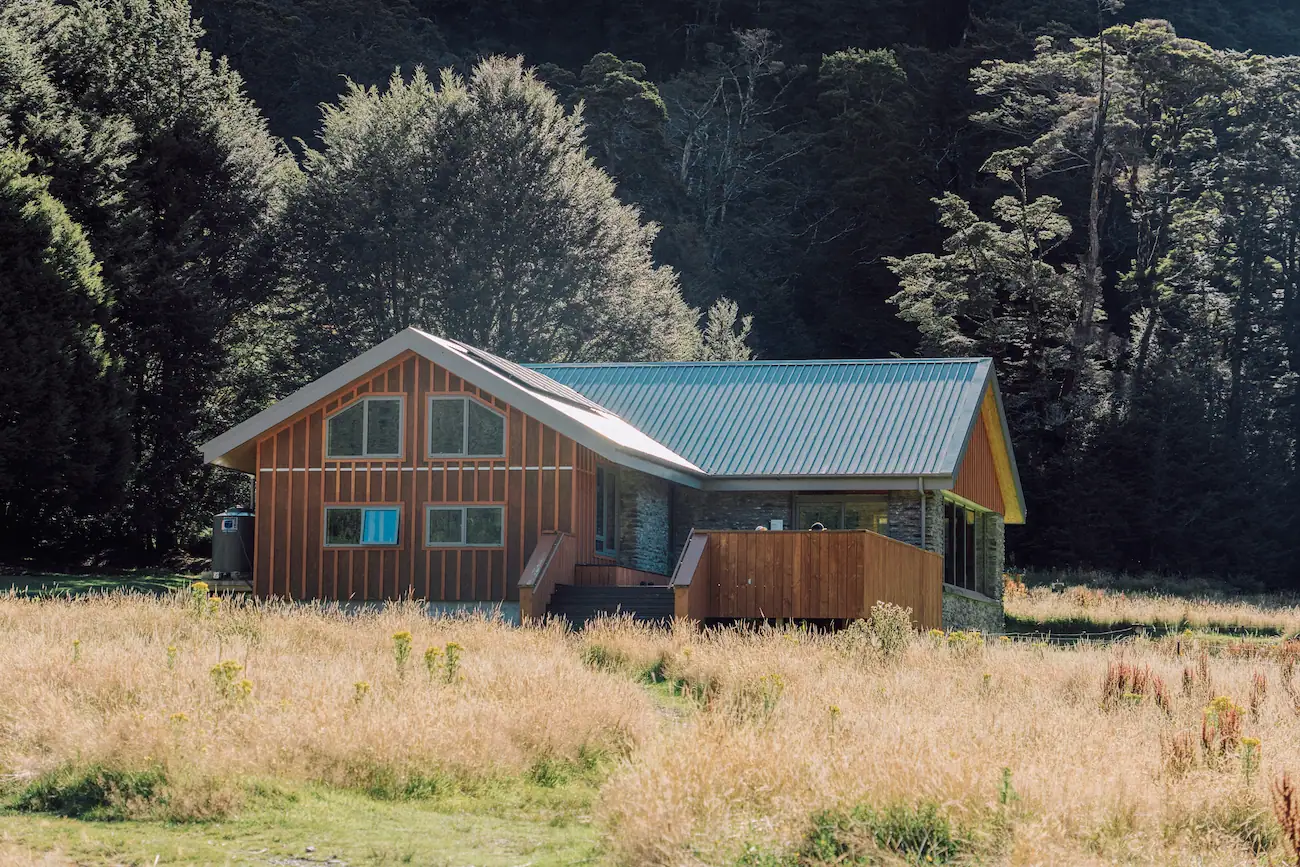
Valley Floor: Raspberry Creek to Aspiring Hut (9 km, flat easy walk)
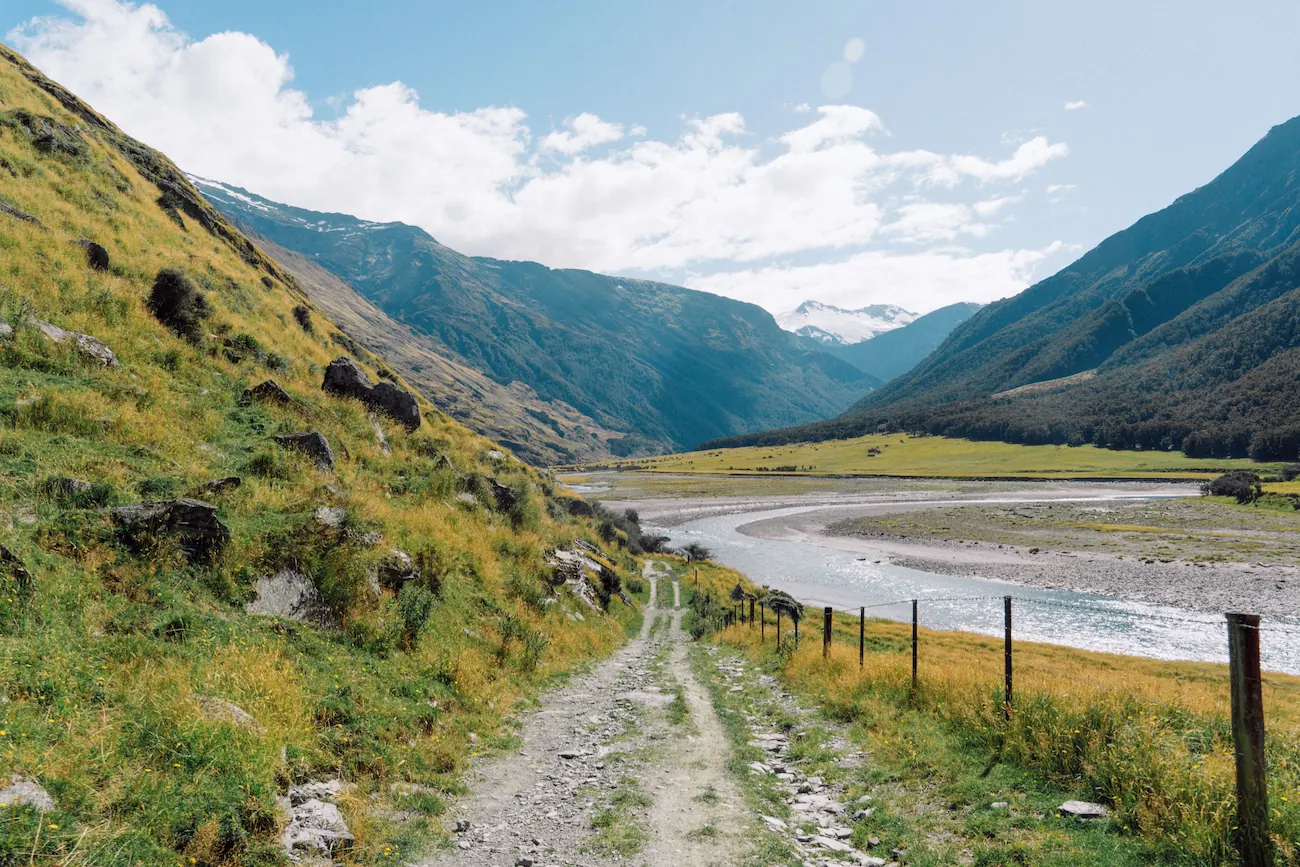
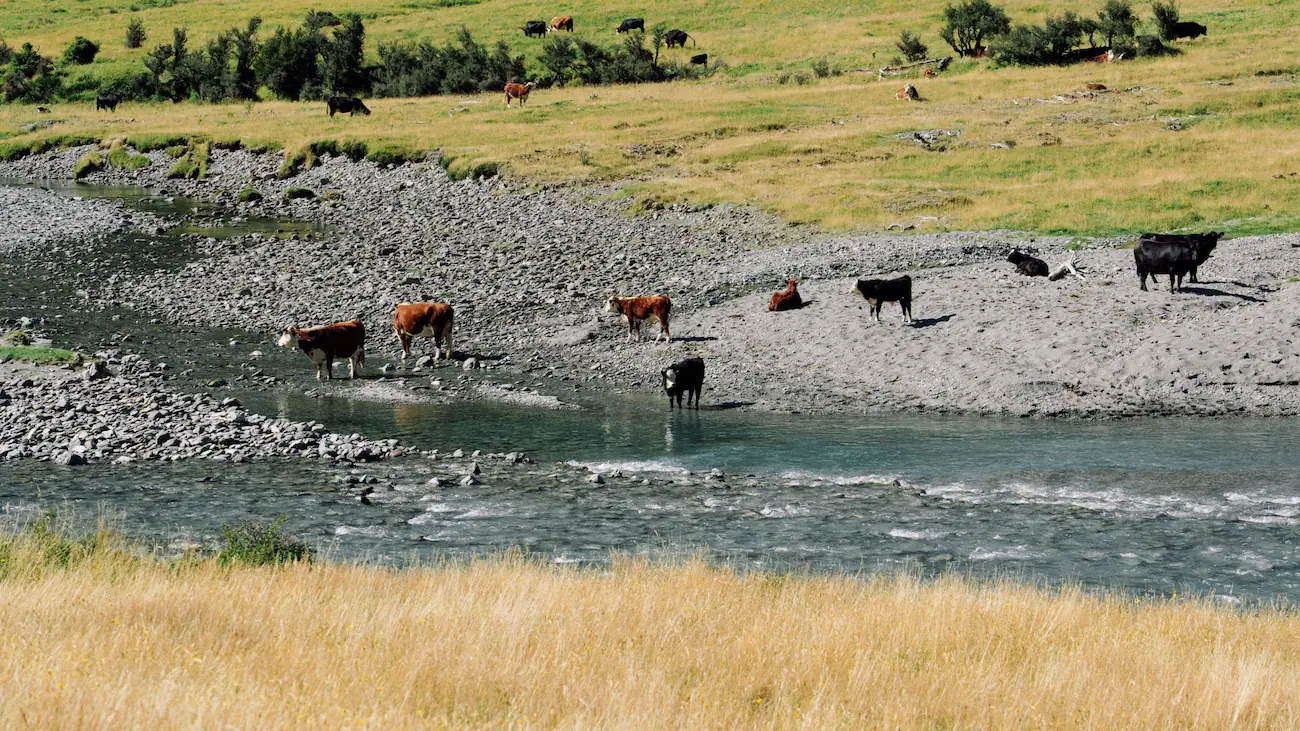
The journey begins at the Raspberry Creek car park. The first few hours are a scenic easy walk through the West Matukituki Valley. You’ll pass through active farmland, following the Matukituki river toward Aspiring Hut.
Upper Valley: Aspiring Hut to Pearl Flat
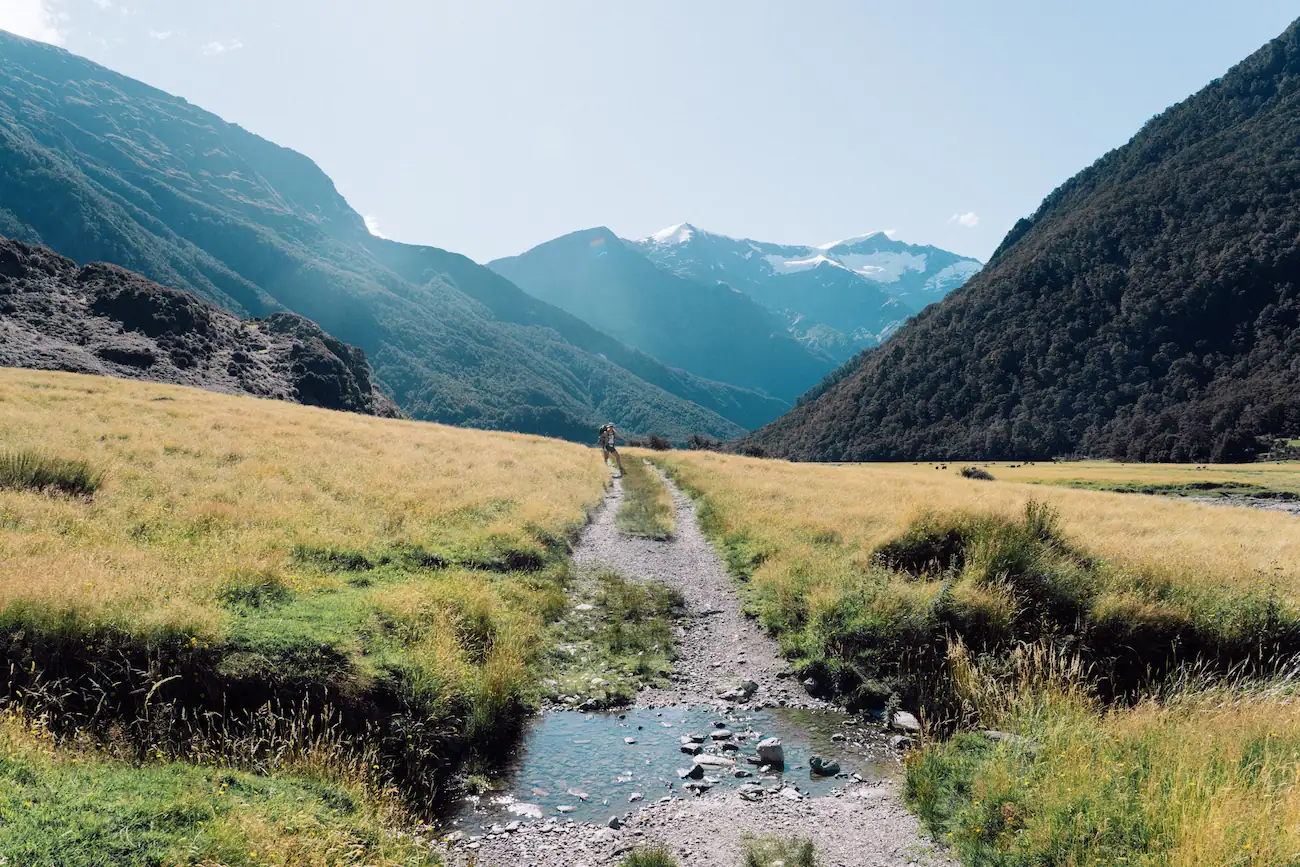
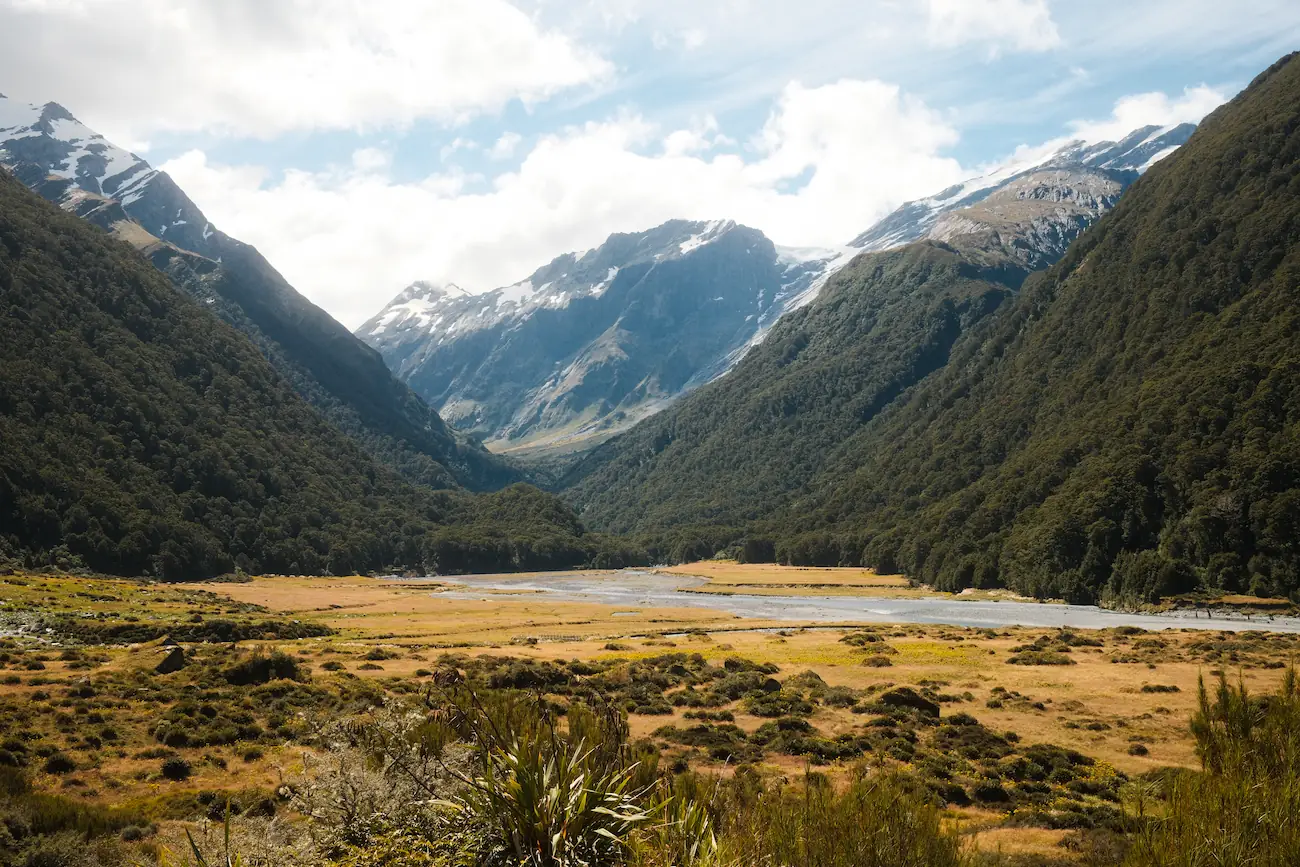
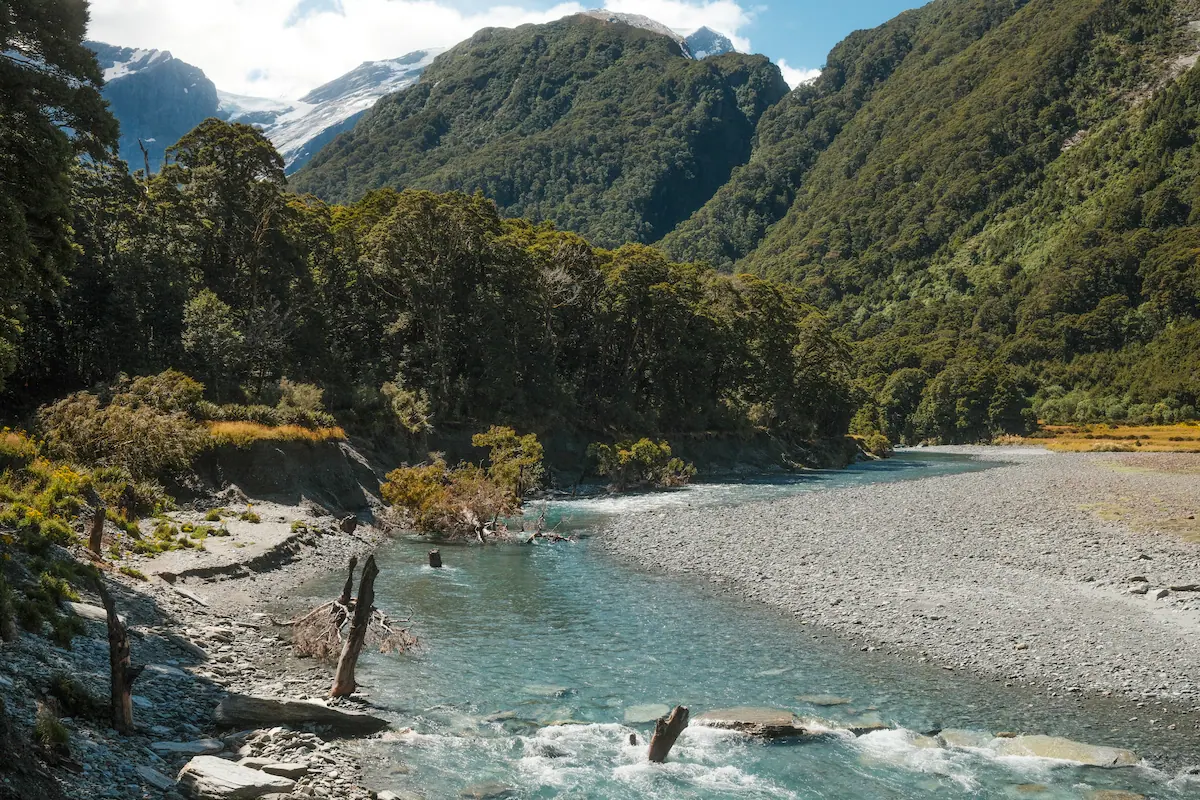
Beyond Aspiring Hut the valley narrows, the day walkers disappear, and Tititea begins to fill the frame ahead. The track continues on river flats and through low scrub, crossing Liverpool Stream and passing Pearl Flat a broad, open meadow that makes an excellent lunch stop with unobstructed views up the
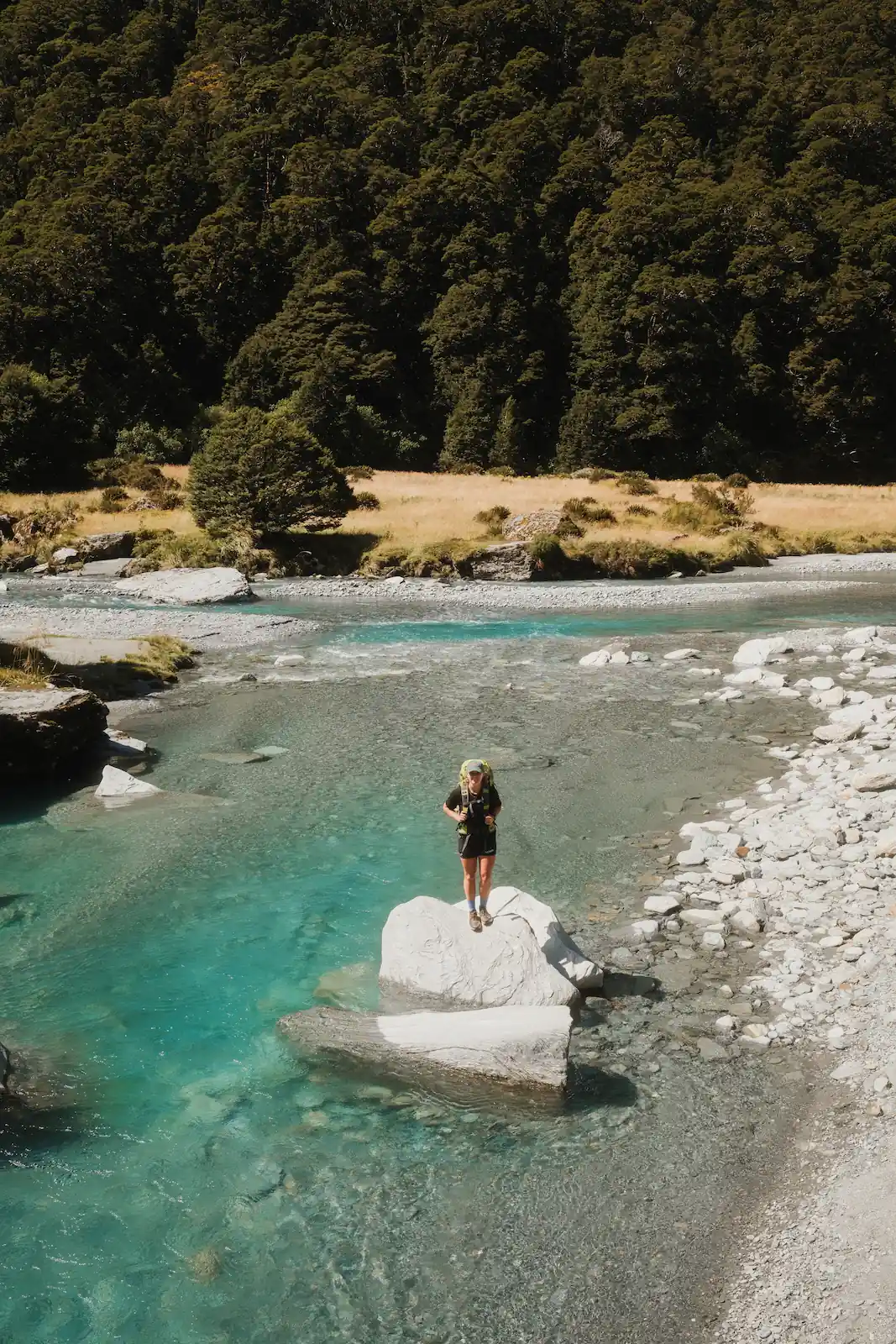
valley and when the weather is good, the rivers have a vibrant torquise colour.

Pearl Flat to Liverpool Hut: The Climb
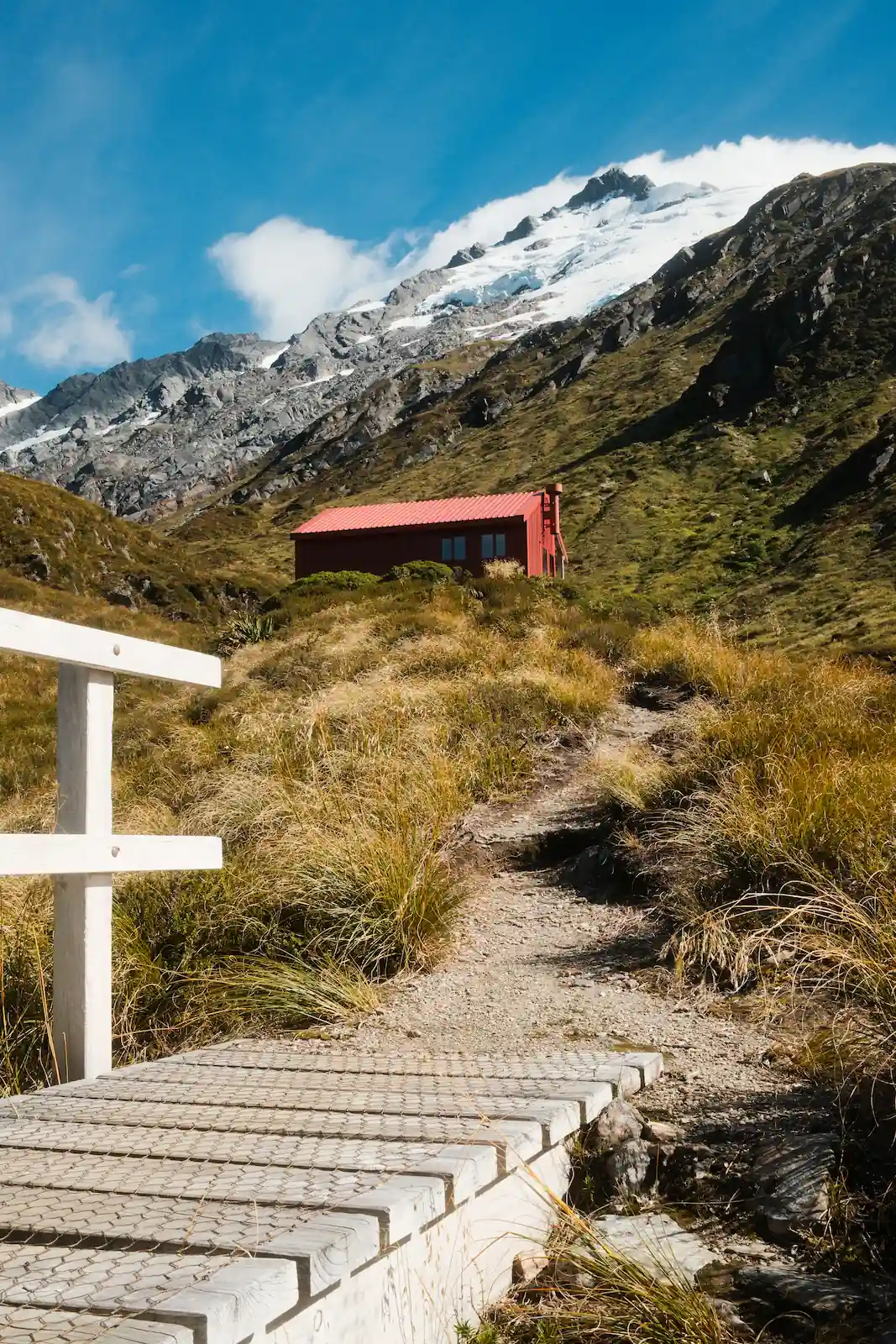
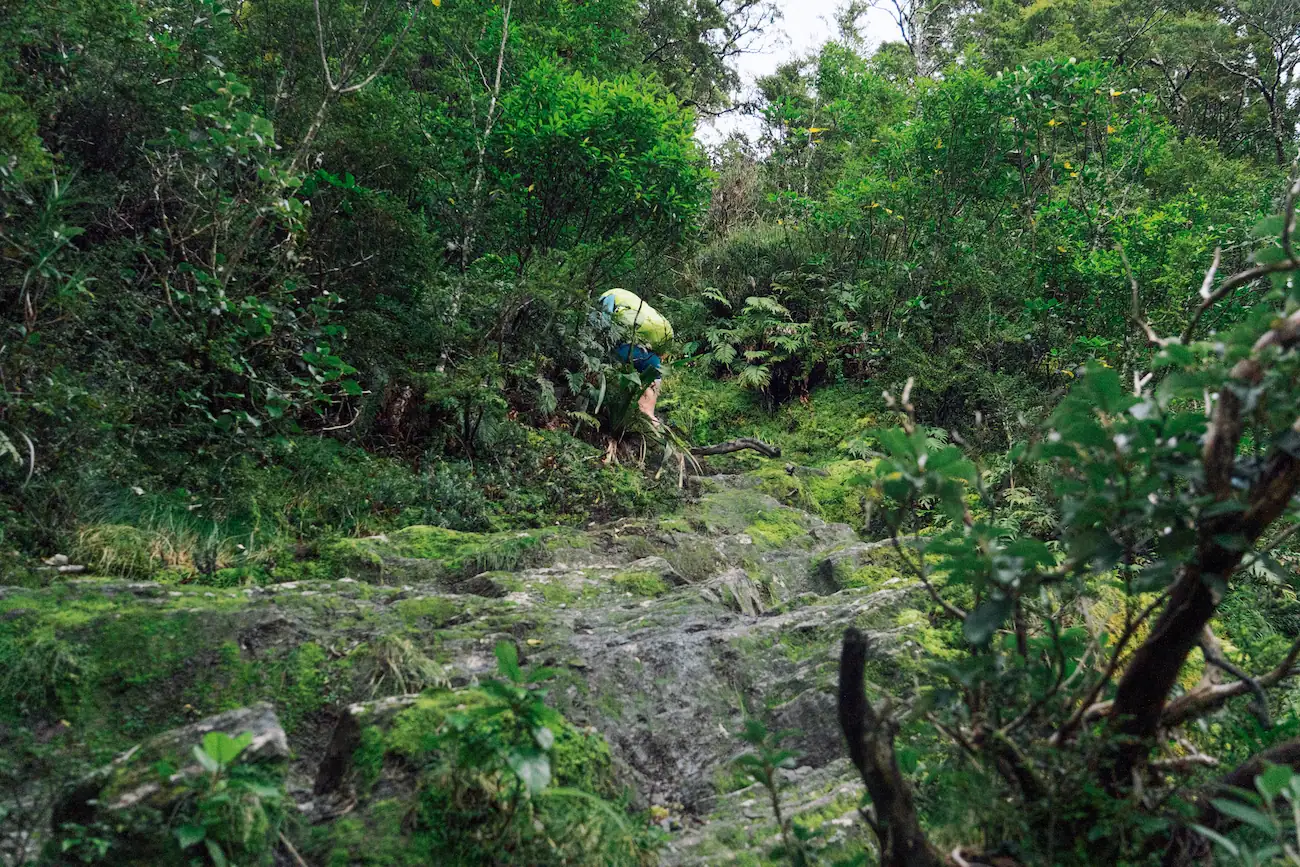
Once you cross the Liverpool Stream swing bridge, the "walk" ends and the "climb" begins. This 2-hour section is an advanced tramping track.
The initial climb through the native forest involves literally pulling yourself up using beech tree roots as handholds. Above the bushline, you will encounter the most dangerous section of the hike which has exposed rock slabs. In shoulder seasons (May/November), these rocks are frequently covered in thin ice or hard-packed snow.
This is the section that turns back underprepared hikers every season. Wet tree roots are genuinely slippery. In winter, ice and snow require crampons and an ice axe.
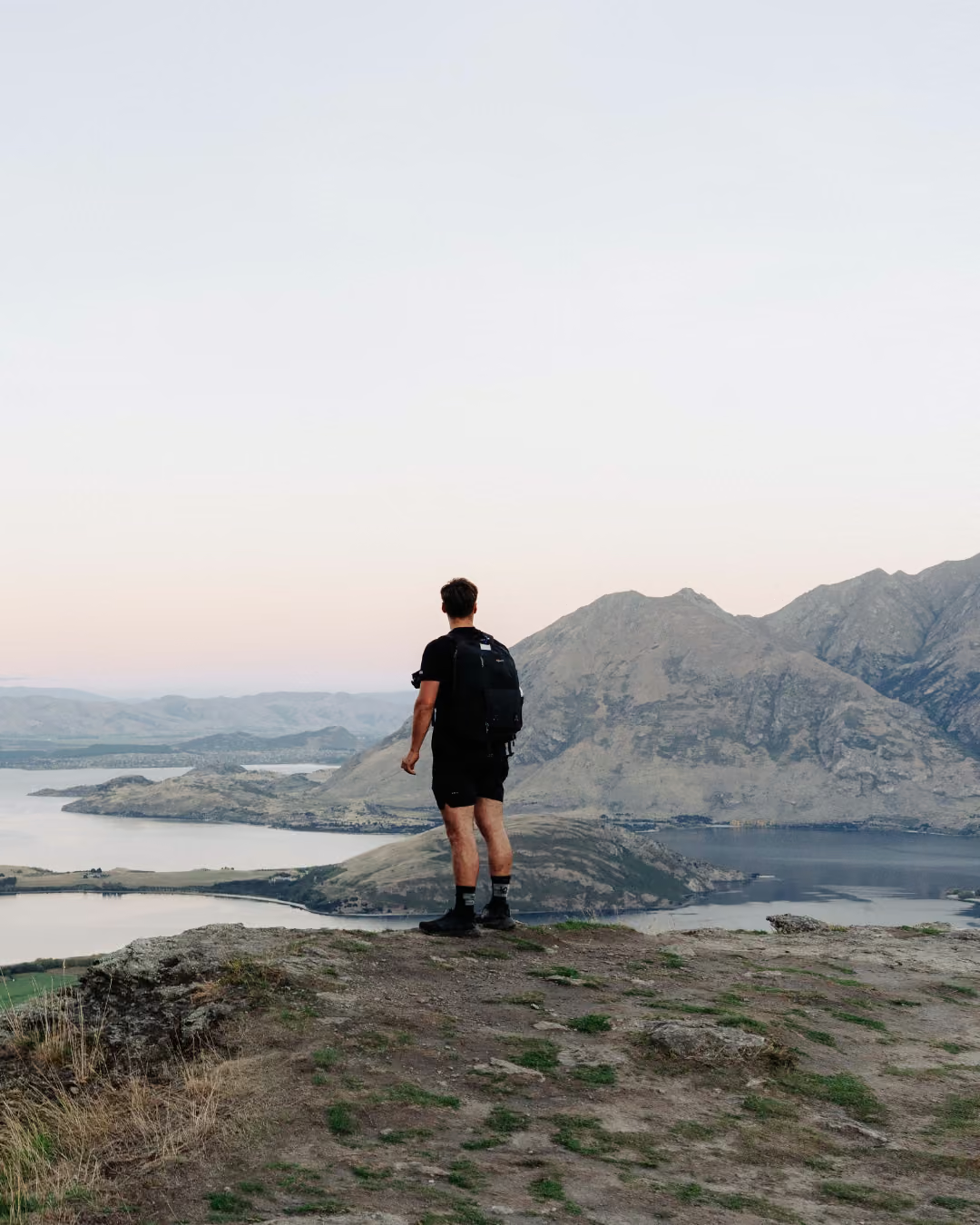
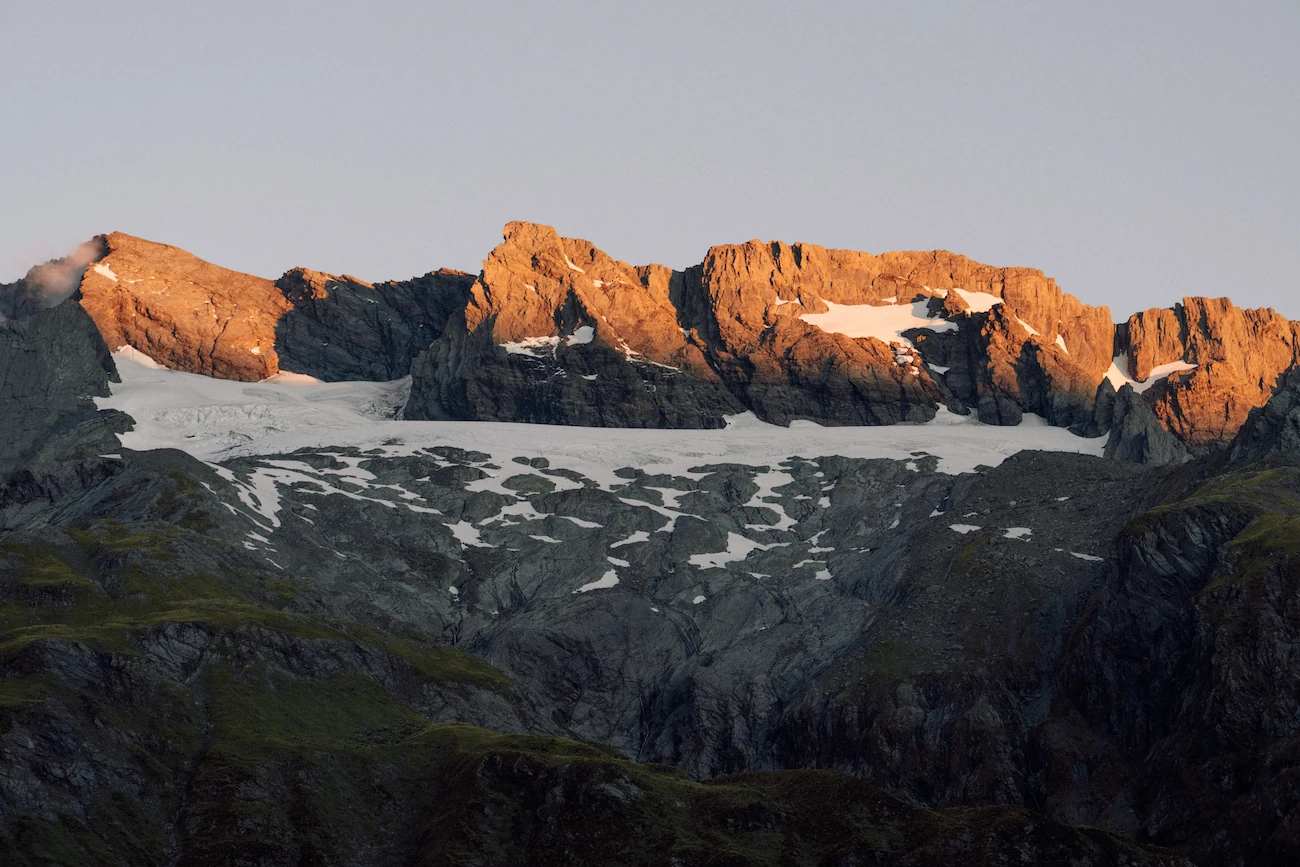
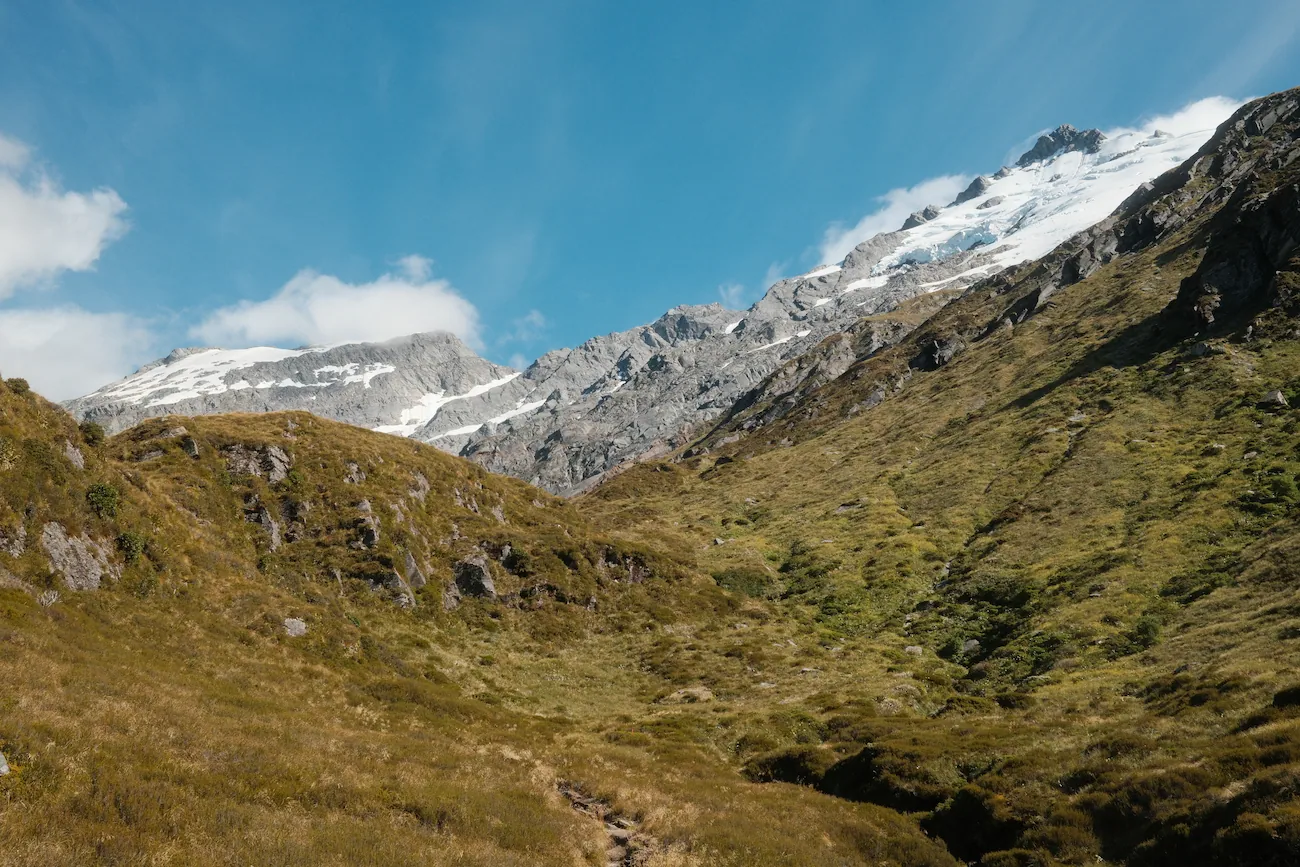
The final kilometre gains 500 metres of elevation. Take your time on the climb. Stop frequently. The views open progressively as you gain elevation. When you clear the bushline, the views are absolutely incredible and give you a huge sense of accomplishment as you've just conquered a fairly technical hiking trail.

Inside Liverpool Hut
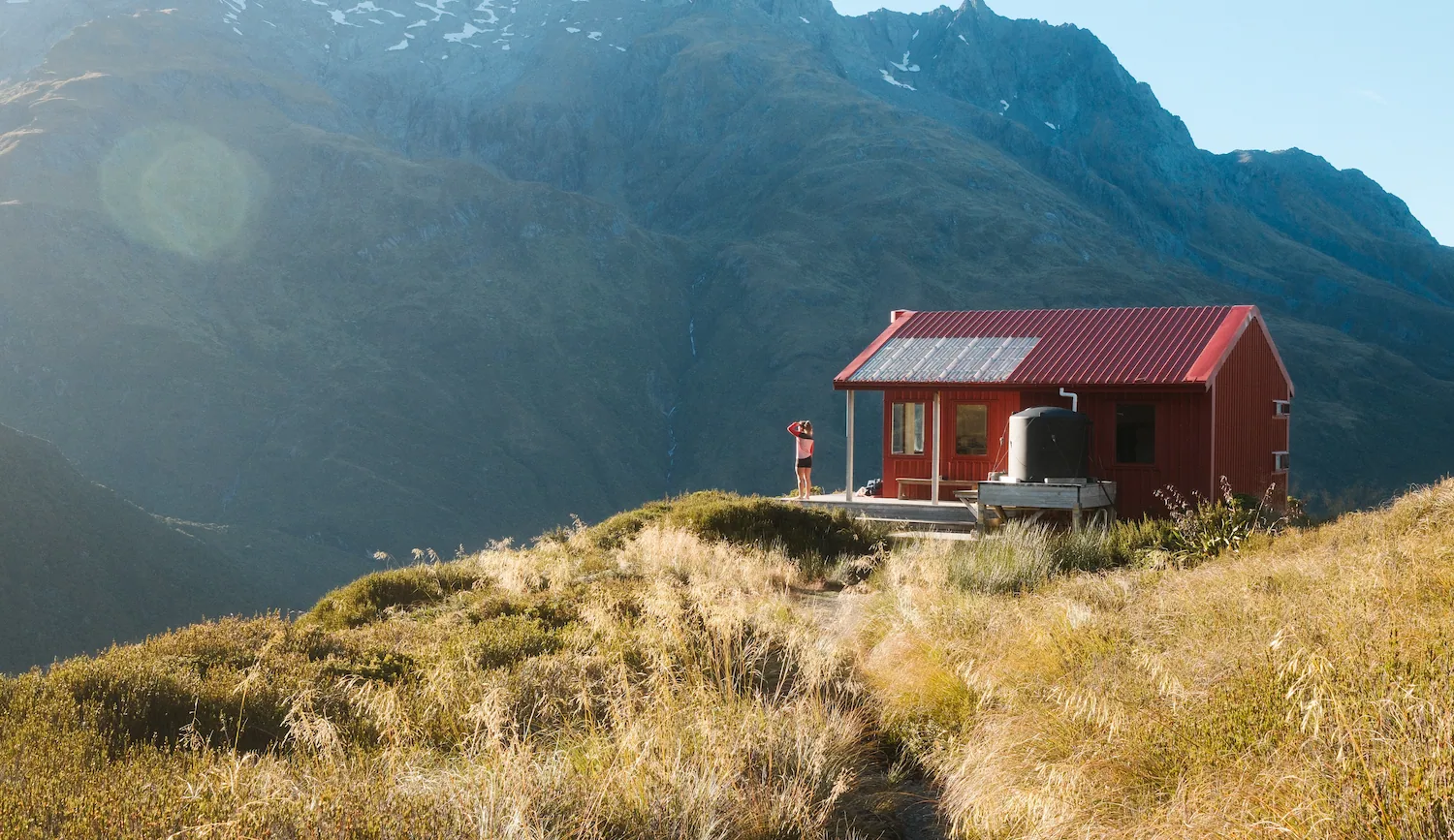
Liverpool Hut is a small but comfortable DOC hut that sleeps upto ten people.
The central room acts as both the kitchen and communal area.
The hut does not have heating, so temperatures can drop significantly overnight even in the middle of summer.
The deck is the highlight of the hut. It faces directly toward Mt Aspiring and provides an uninterrupted view of the mountain’s dramatic southwest face. Early morning light slowly touches the summit while sunset often paints the snowfields in deep orange and red tones. On calm nights the stars above the Southern Alps can be extraordinary. The hut’s long drop toilet is also famous for its view.
Hut Facilities
Huts have basic facilities. You'll need to bring your own:
- Sleeping bag
- Food for your entire trip
- Gas cooker
- Headlamp with spare batteries
- Warm clothing including a down jacket or fleece
- Rain protection
- First aid kit
- Sandfly repellent for the valley floor
- A personal locator beacon because there is no mobile coverage
Drinking Water
Rainwater is collected in an external tank. This water is untreated and must always be boiled or filtered before drinking.
During dry summers the tank level can become low, so it is wise to arrive with enough water from Pearl Flat.
How to Book Liverpool Hut
Summer Season
Between late October and 30 April all bunks must be booked in advance through the Department of Conservation website.
Bookings typically open in June for the following summer season. Popular dates in January and February often fill quickly.
If you have flexibility, midweek nights usually remain available longer than weekends.
Winter Season
From May until late October the hut operates on a first come first served system using DOC hut tickets or a Backcountry Hut Pass.
Winter travel requires additional skills and equipment because snow and avalanche conditions can affect the valley.
Best Time to Visit Liverpool Hut
November to December
One of the best times to visit. Snow is retreating from the higher slopes and the long daylight hours provide excellent hiking conditions.
January to February
Warmest months of the year and also the busiest. Afternoon cloud and occasional thunderstorms can develop, so starting early is wise.
March to April
Arguably the most beautiful period in the valley. Autumn light on Mt Aspiring is remarkable and the number of visitors drops significantly after Easter.
May to June
Early winter conditions begin to appear. Snow can accumulate on the final climb and daylight hours shorten.
July to August
Full winter environment. Only experienced mountaineers with proper gear should attempt the route.
September to October
Snow begins to retreat although conditions remain variable. These months can still provide rewarding trips for experienced hikers.
Liverpool Hut or French Ridge Hut
These two huts offer distinct experiences on opposite sides of the West Matukituki Valley. Liverpool Hut sits closer to Mt Aspiring at 1067 meters, is easier to access and provides sweeping panoramic views of the West Matukituki Valley, making it ideal for hikers who want stunning scenery without the extra climb. Its smaller size (only 10 bunks) creates a quiet, secluded atmosphere, perfect for those who want a sense of solitude.
French Ridge Hut sits at 1480 meters and is slightly more challenging to reach. Its higher location offers closer views of the surrounding glaciers and serves as a convenient base for alpine climbers seeking to explore the peaks.
Your choice depends on whether you prefer a more accessible viewpoint with valley panoramas or a higher, more challenging location closer to the glaciers.
The History of Liverpool Hut
The West Matukituki Valley has long served as an access route into the Mt Aspiring region. Early explorers and climbers began venturing into the valley in the late nineteenth century.
The first recorded ascent of Mt Aspiring took place on Christmas Day in 1909 when Jack Clarke and his companions reached the summit. Long before that, the mountain held cultural significance for Ngāi Tahu, who knew it by the name Tititea.
Climbing parties from the New Zealand Alpine Club established early routes in the surrounding mountains during the 1920s and 1930s.
In 1953 a small bivouac shelter was built on the ridge where Liverpool Hut now stands. Over the following decades the structure was upgraded several times as the valley became more popular with trampers and climbers.
The current hut was constructed in 2009 and remains one of the most scenic backcountry huts in New Zealand.
Why Some Travellers Prefer Private Guided Hiking in New Zealand
With such a vast network of trails spread across both islands, hiking in New Zealand offers an incredible range of landscapes to explore. From alpine passes and remote valleys to coastal tracks and ancient forests, the variety can feel almost endless. At the same time, this diversity also means that conditions, access, and difficulty levels can change significantly from one region to the next.
For many travellers, leaning on expert local knowledge makes the experience far more rewarding. Private guides bring an intimate understanding of the terrain, the weather patterns, and the small details that often go unnoticed by first time visitors.
Planning an outdoor adventure with the support of an experienced guide also removes much of the uncertainty. Logistics, route selection, and safety considerations are handled by someone who understands the landscape deeply. As a result, travellers are free to focus on the experience itself and fully appreciate the wild beauty that makes hiking in New Zealand so memorable.
Private guided hiking trips are designed to be flexible and deeply personal. Full day adventures take place across some of the most spectacular landscapes in the South Island, including Fiordland, Mt Aspiring, and Mt Cook National Park. With deep local knowledge, trails can be carefully matched to your fitness level and the style of day you are looking for. Some guests prefer gentle walks in ancient valleys, while others are drawn to more demanding high alpine routes that climb onto ridgelines and open up sweeping mountain views. There are also opportunities to explore quieter sections of New Zealand’s famous Great Walk network, far from the busier tracks and away from the crowds.
For those wanting to reach areas that are otherwise difficult to access, a private helicopter journey can add another dimension to the day. Scenic landings open up remote valleys and high alpine landscapes, creating opportunities to witness scenery that few visitors ever experience. With the option to add further adrenaline to the trip with rafting and guided kayaking down remote rivers.
A guided hiking experience is about connection, moving through wild landscapes, learning about the environment, and experiencing New Zealand’s backcountry in a deeper and more meaningful way under the safety and guidance of experienced outdoor guides.
Frequently Asked Questions
How difficult is the Liverpool Hut track?
The track is for advacned trampers only. The first fourteen kilometres are relatively easy, but the final kilometre is steep and physically demanding.
Can beginners hike to Liverpool Hut?
The track is not recommended for inexperienced hikers travelling independently. However, beginners with reasonable fitness can complete the trip with an outdoor guide. There are specific elements of this trail which make it particularly challenging, the last uphill climb requires a certain level of mobillity and strength to be able to safely ascend and descend rugged steep terrain.
Can you hike to Liverpool Hut in one day?
It is possible but very demanding. Most visitors prefer to stay overnight so they can enjoy sunset and sunrise views from the hut.
Is there drinking water at the hut?
Yes, rainwater is collected in a tank. The water must always be boiled or filtered before drinking.
When do I need to book the hut?
Bookings are required from late October through April. During winter the hut operates on a first come first served system with DOC hut tickets.
What is the best time of year to visit?
Late spring and autumn are often considered the best seasons because the weather is more stable and the number of visitors is lower than in mid summer.
Join Our Newsletter
Stay inspired with curated travel ideas, local insights, and thoughtful planning advice.


.avif)